
 English
  русский
  عربى
عربى 
What Is Wire Descaling? A Practical Guide to Methods, Benefits and Equipment
Author: Admin
Date: Sep 08,2026
Run your thumb along a coil of 6.5 mm hot-rolled wire rod straight from the mill and you will feel it: a grey, brittle film that flakes under a fingernail. That film is mill scale, the iron oxide layer that forms while red-hot steel cools in open air. Feed that rod straight into a drawing die and the oxide turns abrasive: it scores the die, embeds in the wire surface, and resurfaces hours later as scratched wire, flaking zinc and shortened die life. Wire descaling is the production step that removes this scale before drawing, and in most wire plants it is the least expensive safeguard against the most expensive downstream problems. This article explains what wire descaling is, how the main methods differ, and where the process fits into a complete line.
Content
What Is Wire Descaling? A Working Definition
Wire descaling is the removal of mill scale and rust from the surface of wire rod so that dies, lubricants and coatings work against clean steel instead of hard oxide.
Definition
Wire descaling is the mechanical or chemical removal of the iron oxide scale formed on wire rod during hot rolling, carried out before drawing, coating or inspection.
The scale itself is not one material. As a rod cools from rolling temperature, oxygen and iron react into three stacked oxide layers: wustite (FeO) nearest the steel, magnetite (Fe3O4) in the middle, and a thin hematite (Fe2O3) skin outside. Wustite is brittle and usually the thickest layer, which is why bending the rod back and forth cracks the scale off so effectively. Descaling equipment is engineered around exactly that weakness: bend the rod, brush the debris away, grind what resists, or dissolve the rest in acid.
Typical Mill Scale Composition on Carbon Steel Rod
FeO, wustite (inner)
72%
Fe3O4, magnetite (mid)
23%
Fe2O3, hematite (outer)
5%
Indicative values; proportions shift with rolling temperature and cooling rate.
Why Descaling Decides Die Life and Surface Quality
Scale is harder and far less ductile than the steel beneath it, so any oxide carried into a drawing die behaves like grinding grit rather than lubricant.
0.1 mm
Typical oxide scale thickness on hot-rolled rod
1-3%
Steel converted to scale during hot rolling and cooling
3
Stacked oxide layers, from FeO at the steel to Fe2O3 outside
The damage rarely announces itself at the die first. It shows up as a pattern of costs that experienced drawing supervisors recognize quickly:
- Die wear: oxide particles compact against the die surface, forcing earlier repolishing and replacement.
- Surface defects: scale drawn through a die leaves longitudinal scratches and die marks that later plating cannot hide.
- Coating failures: zinc, phosphate and paint applied over residual scale blister and flake, because coatings bond to oxide, not to steel.
- Uneven lubrication: loose fragments trap and strip lubricant, starving the deformation zone on the next pass.
"A drawing die does not forgive scale. Whatever oxide enters the die either ends up pressed into the wire or worn into the die."
In procurement terms, the cost of skipping descaling never stays hidden. Shops drawing spring, rope and bearing grades see it in die inventory, in wire rejected at inspection, and in customers who audit surface finish before every shipment.
The Four Main Wire Descaling Methods Compared
Almost every industrial descaling method belongs to one of two families: mechanical methods that crack or grind the scale away, and chemical pickling that dissolves it.
| Method | How it works | Best suited for | Watch-outs |
| Reverse bending | Rod passes over staggered sheaves so the surface flexes and brittle scale cracks away | Medium to heavy scale on rod before drawing | Leaves fines that brushing must clear |
| Wire brushing | Rotating brushes scrub loosened scale and dust off the surface | Finishing after bending; light rust | Brush wear and dust extraction add running cost |
| Abrasive belt | A belt grinds a thin, uniform layer off the wire surface | Stainless and specialty wire needing bright surfaces | Removes base metal; belts are consumables |
| Acid pickling | Hydrochloric or sulfuric acid dissolves scale in immersion tanks | Heavy scale, tight coils, complex shapes | Spent acid treatment, fume control, over-pickling risk |
On carbon steel lines the methods usually work in sequence: a bending descaler cracks the bulk of the scale at line speed, a brushing unit clears the fines, and a coating unit finishes the surface for drawing. Layout, rod diameter and scale thickness decide how many stations the line needs.
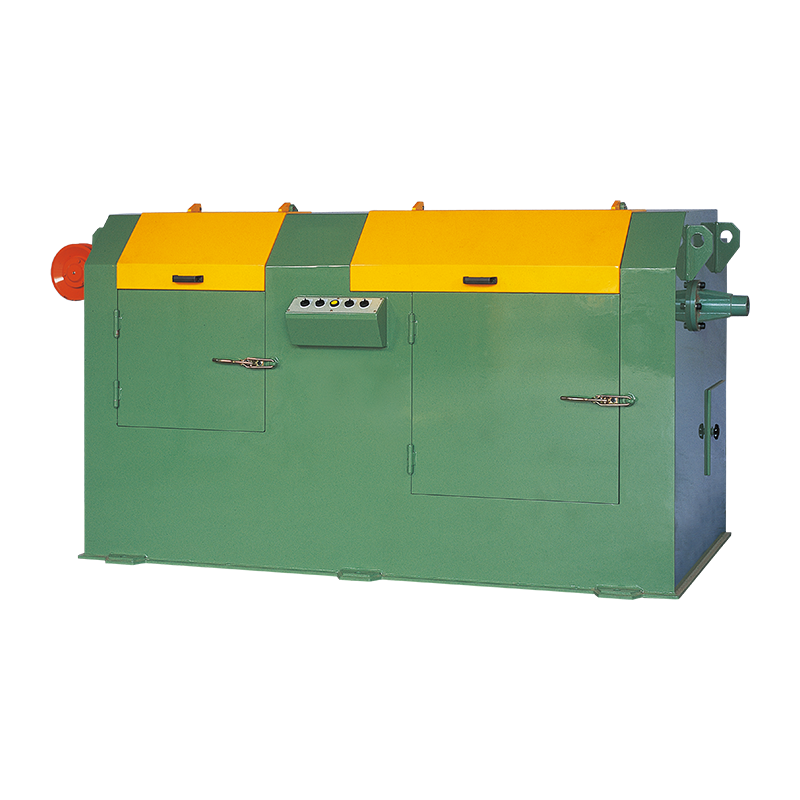 Bending Wire Descaling Machine for Rod Pre-TreatmentThis bending descaler cracks mill scale on rod up to 16mm using orthogonal rollers with tungsten carbide inserts. It fits the carbon steel line sequence described, where bending, brushing and coating stations work in order before drawing.View Product →
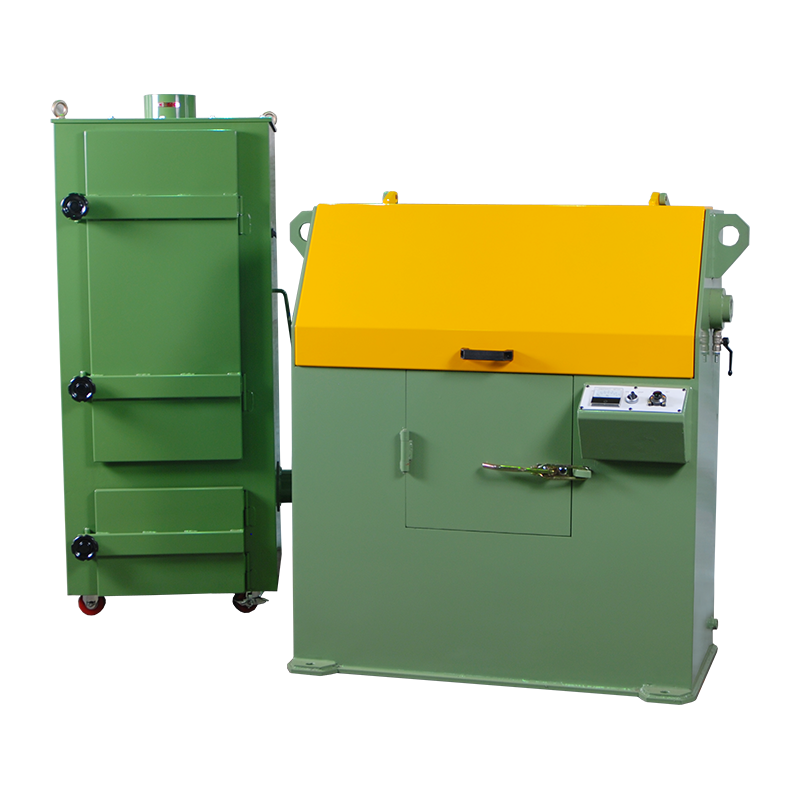
Stainless and other specialty wires raise the bar, because their surfaces must stay bright and defect-free. Abrasive belt descaling serves that market by grinding a controlled, uniform layer off the surface rather than relying on scale fracture alone.
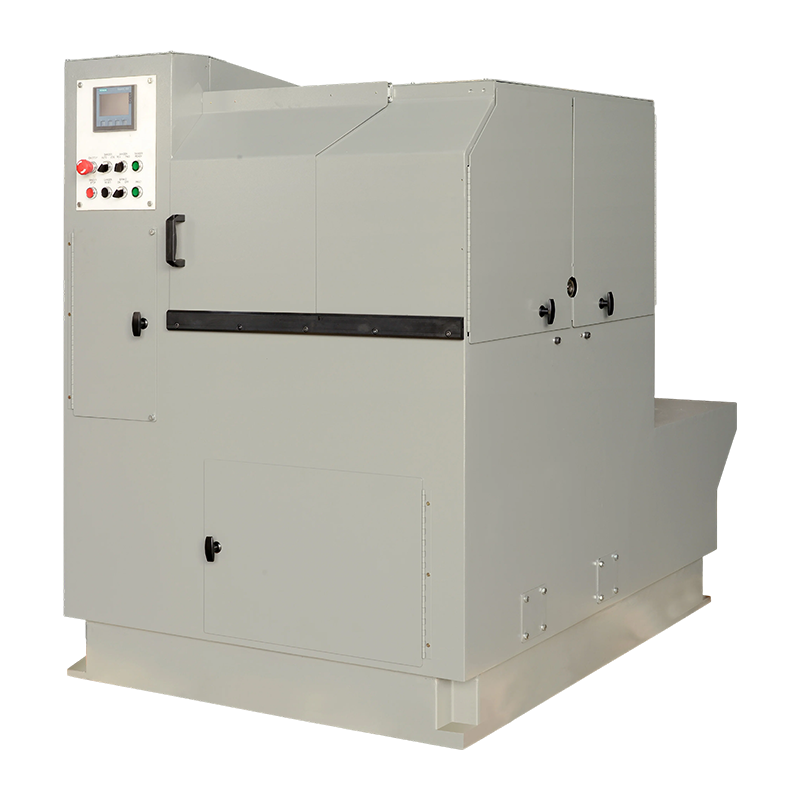 Abrasive Belt Descaling Machine for Stainless and Carbon WireDesigned for low to high carbon and stainless rod, this single-head abrasive belt descaler sands surfaces uniformly at speeds up to 5 m/s, with a dust collector included. It suits bright, defect-free wire where scale fracture alone is insufficient.View Product →
Mechanical Descaling or Pickling: How to Choose
Choose mechanical descaling when you want a dry, compact line with minimal waste treatment and your scale is not extreme; choose pickling when heavy scale, tight coil shapes or demanding surfaces justify handling acid.
Mechanical Descaling
- No acid effluent and no fume extraction required
- Compact inline layout directly after the payoff
- Scale collected as dry fines, easy to handle
- Trace oxide can remain in tight coil gaps
Chemical Pickling
- Reaches recesses and laps inside tightly wound coils
- Handles the heaviest scale in a single operation
- Requires spent acid neutralization and fume control
- Over-pickling risks hydrogen pickup on high-carbon grades
Many plants weigh these trade-offs line by line before committing. Our earlier comparison of wire descaling vs pickling walks through the cost, environmental and surface-quality criteria in more detail, including where a combined mechanical plus pickling route makes sense.
Where Descaling Fits in a Wire Drawing Line
Descaling is never a standalone operation. It sits second in a chain that runs from payoff to take-up, and every station downstream depends on how well it was done.
Payoff
The coil or spool feeds rod at steady tension. A poor payoff introduces kinks that no descaler can correct afterwards.
Descaling
Bending, brushing or belt units strip the oxide layer. Operators inspect the surface here, before anything else touches the wire.
Coating and lubrication
A coating unit applies borax, phosphate or lime so drawing lubricant bonds to bare steel and stays in place under pressure.
Drawing
Dies reduce the section pass by pass. Clean, coated wire extends die life and holds dimensional tolerance.
Take-up
Coilers wind the finished wire. Clean wire stacks evenly and unspools without scratching the layers beneath.
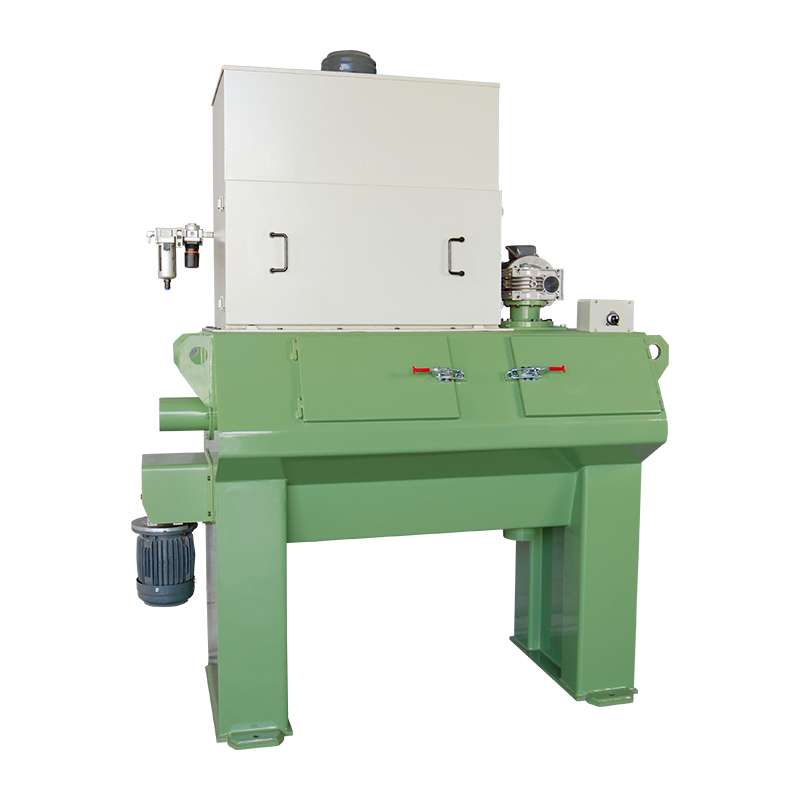 Dry Lubricant Coating Unit for Wire Drawing PreparationThis unit applies a consistent dry lubricant film to rod via motorized conveyor before cold rolling or drawing. Following descaling, coating finishes the surface so clean wire stacks evenly and meets the demands of spring, rope and high-carbon applications.View Product →
Surface requirements differ sharply by end use. Spring, rope and high-carbon steel wire production tolerate far less residual oxide than, for example, low-carbon nail stock, so the descaling and coating stages should be specified starting from the final application rather than from the mill.
Wire Descaling FAQ
Does wire descaling remove every trace of oxide?
Rarely in a single pass. Bending removes the bulk, brushing clears the fines, and pickling reaches recesses that mechanical methods miss. Most lines combine methods and accept the small residual oxide that coatings and drawing can tolerate.
Is mechanical descaling as good as pickling?
For most carbon steel wire, yes, when it is paired with coating and proper lubrication. Pickling still wins on heavy scale and complex coil shapes, at the cost of acid handling, fume control and effluent treatment.
What happens if you draw wire without descaling?
Die wear accelerates, the wire surface picks up scratches and embedded oxide, and coatings applied later blister or flake. Die consumption and rework costs rise quickly, often within the first production shift.
Can scale come back after descaling?
Yes. Bare steel re-oxidizes in humid storage, so descale close to drawing time, keep descaled coils dry, or plan a light re-brushing pass before the coating unit.
Contact Us Now
Related products
Related News
 For precision wire machinery or
integrated plant solutions, please
contact the
CHENG I Sales & Engineering Team.
For precision wire machinery or
integrated plant solutions, please
contact the
CHENG I Sales & Engineering Team.


Product Category
Wire Descaling Machine WIRE DRAWING MACHINE Take-Up Coiler Cutting Machine Pay-Off Machine Other Equipment/AccessoriesContact Us

+86-563-6616199 (Ext: 105, 103, 111)

+86-15167365999

John Wang & Elaine Zhao

sales@chengiwire.com

No. 8 Keji Road, North District, Guangde Economic Development Zone, Xuancheng City, Anhui Province, China
Copyright © CHENG I Wire Machinery Co. Ltd. All
Rights
Reserved
Wire Machinery Manufacturer | CHINA
