
 English
 русский
 عربى

How Digitalization and AI Are Transforming Wire Drawing Process Control
Author: Admin
Date: Sep 30,2026
At 15 m/s, a high-carbon steel wire drawing line has only about two seconds between the moment a die starts to overheat and the moment the wire breaks. A human operator watching a conventional control panel can usually do one thing in that window: stop the line. A digitalized control system is already adjusting speed, coolant flow, and spooling tension from data collected in milliseconds. That gap is why how digitalization and AI are transforming wire drawing process control matters to every plant manager, process engineer, and maintenance team.
Industry benchmarks for AI-based predictive maintenance put downtime reductions at 30 to 50 percent, with machine life gains of 20 to 40 percent. Wire drawing plants applying the same approach report fewer unplanned stops, longer die life, and tighter diameter tolerance. The question is no longer whether to adopt these tools, but where to start.
Wire breaks and die failures are the two largest sources of unplanned downtime in a wire drawing plant, and both are directly addressable by AI-based process control.
Content
- 1 How Digitalization and AI Are Transforming Wire Drawing Process Control in Real Time
- 2 What AI Adds to Wire Drawing Process Control That Automation Alone Cannot
- 3 The Data Pipeline That Makes Digitalization and AI Work in Wire Drawing
- 4 How to Implement Digitalization and AI for Wire Drawing Process Control on Existing Lines
- 5 Frequently Asked Questions About Digitalization and AI in Wire Drawing
How Digitalization and AI Are Transforming Wire Drawing Process Control in Real Time
Digitalization and AI are transforming wire drawing process control by replacing fixed machine settings with continuous, data-driven adjustments.
Closed-loop process control means that sensors measure a variable, a controller compares it with a target, and an actuator corrects it automatically, with no operator step in between. A modern wire drawing line carries load cells on die holders, encoders on capstans, pyrometers for wire temperature, vibration probes on the machine frame, and motor current sensors on each AC drive. These components produce a steady stream of process signals. Edge controllers evaluate those signals locally. AI models compare the current machine state against a learned operating envelope, and control actions such as speed setpoints, cooling valve positions, capstan torque, and spooler tension are updated in milliseconds. The operator role shifts from watching gauges to supervising exceptions.
None of this requires the operator to interpret charts on the shop floor. The control logic itself changes, as shown in the table below.
| Process variable | Conventional control | AI-assisted control |
| Die wear | Detected by diameter drift or scheduled checks | Predicted from load and vibration trends |
| Wire break risk | Reaction after the break happens | Warning 20 to 60 seconds before the event |
| Drawing speed | Fixed profile per product | Adapted to material and die state |
| Spooling tension | Manual setpoint per coil | Closed-loop correction per layer |
| Quality record | Sample inspection offline | Per-coil traceability from sensors |
Core change: decisions move from scheduled maintenance and manual inspection to condition-based control, executed in under 100 milliseconds.
What AI Adds to Wire Drawing Process Control That Automation Alone Cannot
AI adds prediction and adaptation to wire drawing process control, and conventional PLC logic cannot deliver either at the same speed or with the same accuracy.
Fixed automation follows rules written in advance. AI models learn the normal behavior of a specific machine, including its vibration signature, temperature response, and spooling pattern, and flag deviations before they become defects. That is why the same machine drawing the same steel grade performs differently with AI-assisted control.
Predicting die wear before it becomes a defect
Die wear gives early signals in load cell readings and motor current long before wire diameter drifts outside tolerance. A model trained on historical wear data estimates the remaining die life, so the operator changes dies during a planned stop instead of after a break. On high-carbon and prestressing steel lines, this alone can reduce scrap by a measurable margin.
Anticipating wire breaks instead of reacting to them
Acoustic and vibration patterns change seconds before a break in high-carbon and prestressing wire. Models that learn these patterns issue a 20 to 60 second warning, giving the line time to reduce speed or stop in a controlled way. Avoiding a snap saves not only the wire, but also the threading time and re-drawing effort that follows every break.
Fixed-logic automation
- Reacts to alarms after the event
- Uses one speed profile per product
- Maintenance on a fixed schedule
- Operator adjusts setpoints manually
AI-enabled process control
- Predicts failures from learned patterns
- Adapts speed to each material batch
- Maintenance triggered by condition
- Self-tunes within safe operating limits
The retrofit path is shorter when the machine builder has already integrated sensor interfaces and advanced electrical control. CHENG-I Premium Wire Equipment, a wire machinery manufacturer founded in 1970 and based in Taiwan's Tainan Science Park, equips its straight-line wire drawing machines with the electrical architecture that digital control systems need. Plants adopting AI-based process control can keep their existing machines and add the control layer on top.
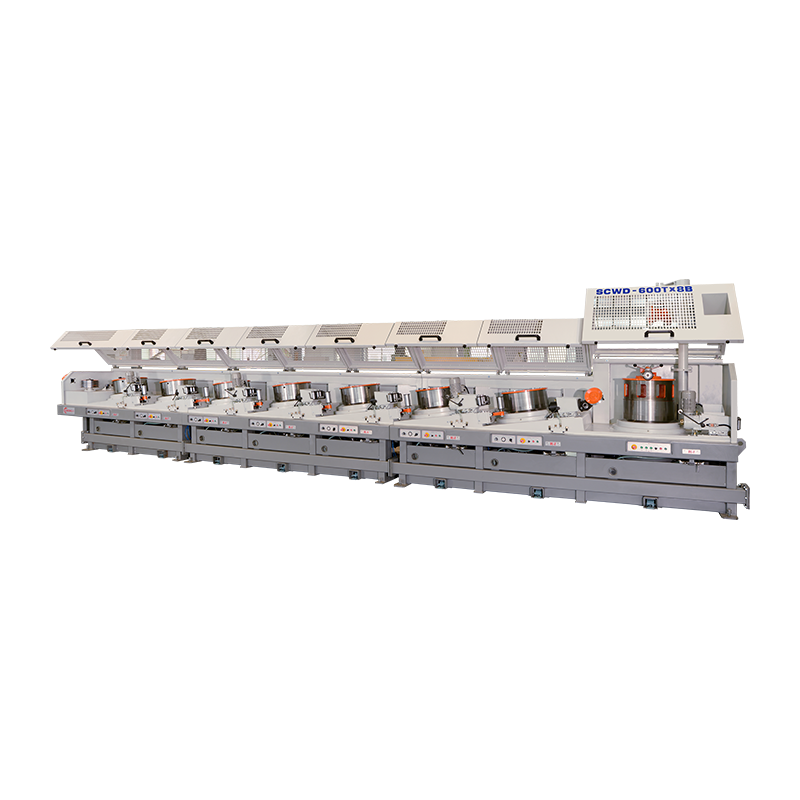
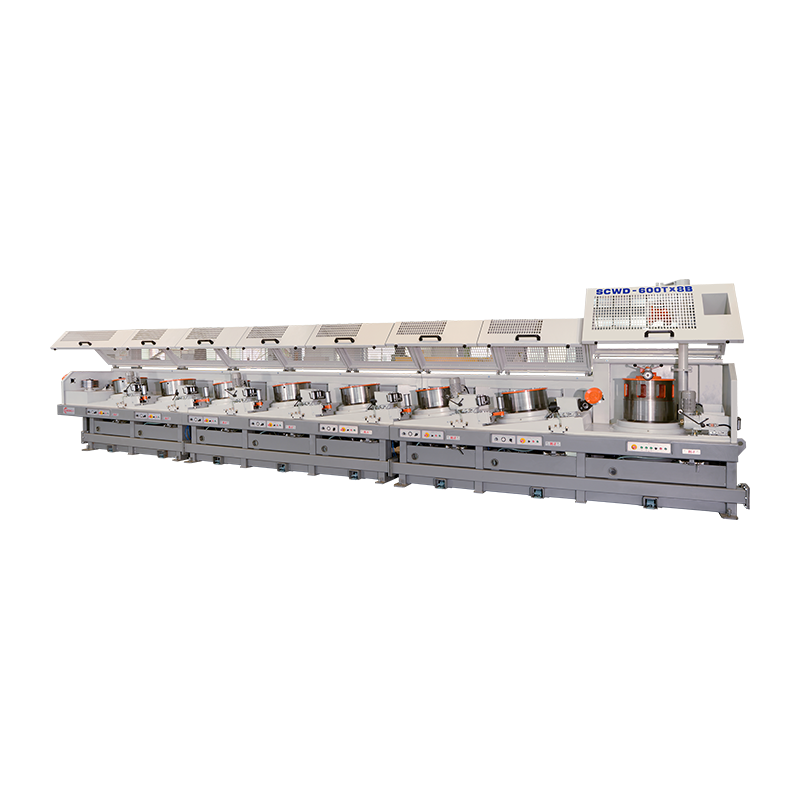 Straight Line Wire Drawing Machine by CHENG-IThis heavy-duty machine supports 2–16 drafts and multiple wire types, with dancer-arm speed control and optional coated capstans. Its integrated electrical architecture suits adding AI-based process control.View Product →
The Data Pipeline That Makes Digitalization and AI Work in Wire Drawing
Digitalized wire drawing process control runs on a four-stage data pipeline: sense, aggregate, model, and act.
- Sense. Instrument the line with load cells, encoders, pyrometers, and vibration probes.
- Aggregate. An edge gateway timestamps and normalizes all signals into one format.
- Model. AI inference calculates break risk, wear index, and quality predictions.
- Act. The control loop adjusts speed, tension, and cooling, or raises an alarm.
This pipeline is what makes both real-time control and post-shift analysis possible. Without it, the data collected by sensors stays raw and disconnected. With it, the same data becomes the basis for every control decision on the line.
Definition
Digital twin: a virtual replica of the drawing line that mirrors live machine state and lets engineers test control changes before applying them to production.
How to Implement Digitalization and AI for Wire Drawing Process Control on Existing Lines
Most existing wire drawing lines can be digitalized without replacing the drawing machine itself, provided the machine builder left room for sensors and control upgrades.
Start with measurement. Add load cells, an encoder, and a vibration probe if they are not already fitted. Then connect the signals to an edge controller. The first control loop to close is usually take-up tension, because it affects coil quality and downstream handling immediately. Once tension control is stable, expand to die cooling and speed adaptation.
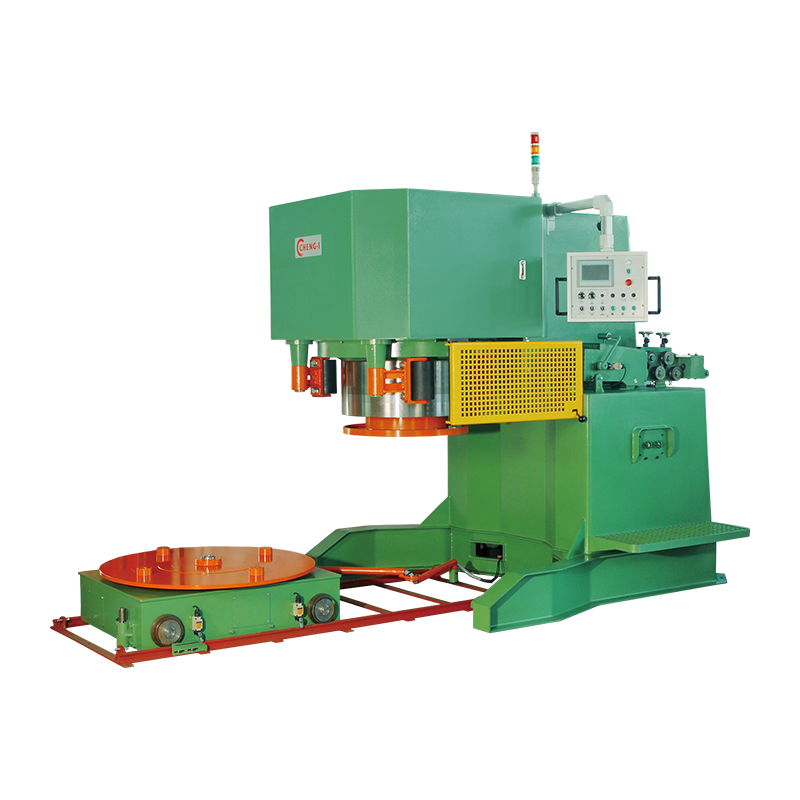
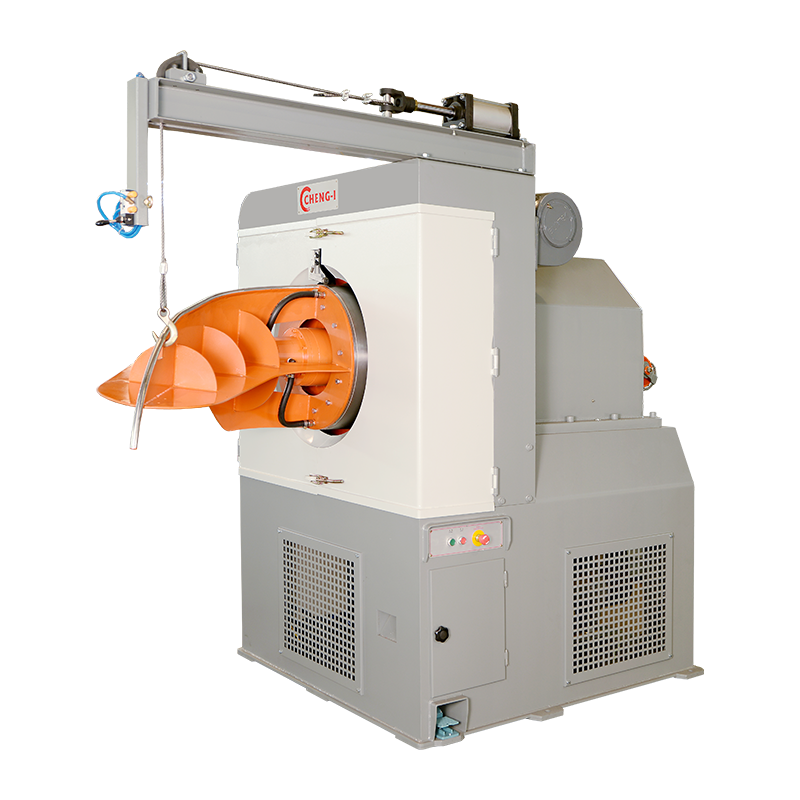 High Speed Coiler with Horizontal CapstanFeaturing forced air-cooled capstans from 300mm to 900mm and tungsten carbide-coated wear surfaces, this coiler enables stable take-up tension—the first loop to close in a digitalized control plan.View Product →
Rod surface preparation belongs in the same plan. Consistent scale removal improves drawn wire quality and die life, and the effect is explained in more detail in our guide on descaling quality and die life. A line that feeds inconsistent rod into the drawing machine will confuse any process model.
Machine builders are shortening the retrofit path. CHENG-I Premium Wire Equipment has built continuous wire processing equipment since 1970, and its current sixth-generation inverted vertical capstan machines expose the control points that a digital controller needs to read and write, including capstan speed, die load, and take-up speed. The same design philosophy carries through the company's take-up coilers, which support closed-loop tension control for high-speed production.
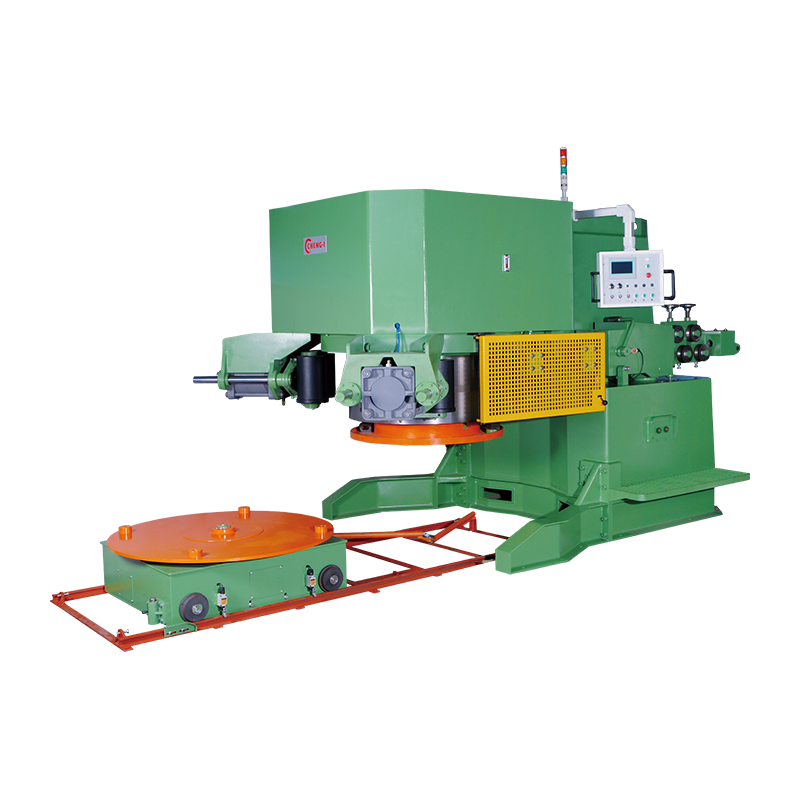 Inverted Vertical Capstan Wire Drawing MachineAvailable in single- or double-draft versions with water-cooled capstans and HMI monitoring, these machines expose capstan speed, die load, and take-up speed for closed-loop digital control.View Product →
- Pick one line, not the whole plant, for the first digitalization project.
- Instrument it correctly with load cells, an encoder, and a pyrometer.
- Close one control loop first, preferably take-up tension.
- Train operators to supervise exceptions instead of micro-adjusting setpoints.
A realistic first target: reduce unplanned stops on one high-carbon line by 30 percent within three months, then expand the digitalized control loop to die cooling and speed adaptation.
Frequently Asked Questions About Digitalization and AI in Wire Drawing
Do I need to replace my wire drawing machines to use AI process control?
No. Most existing machines can be retrofitted with sensors and an edge controller. The practical limit is usually the availability of sensor ports and the willingness of the control system to accept external setpoints. Newer machines with advanced electrical control, such as CHENG-I straight-line and inverted vertical capstan models, reduce this effort substantially.
What data should a plant collect first for AI-based process control?
Start with motor current, line speed, die-holder load, and take-up tension. These four signals detect most die wear and wire break conditions in high-carbon and stainless steel wire drawing. Add vibration probes and wire temperature only after the first control loop is stable.
How much can AI reduce wire breaks and downtime?
Industry implementations of predictive maintenance report 30 to 50 percent less unplanned downtime and 20 to 40 percent longer machine life. In wire drawing specifically, plants with closed-loop take-up control and die-wear monitoring typically report fewer breaks per 100 tons drawn and more consistent coil quality.
Can AI control spooling tension in real time?
Yes. Take-up coilers equipped with load cells and encoder feedback can adjust tension per layer, which is critical for high-speed continuous lines. This is one of the most immediate and measurable wins from digitalization, because coil density and wire stacking directly affect downstream pay-off and shipping.
Contact Us Now
Related products
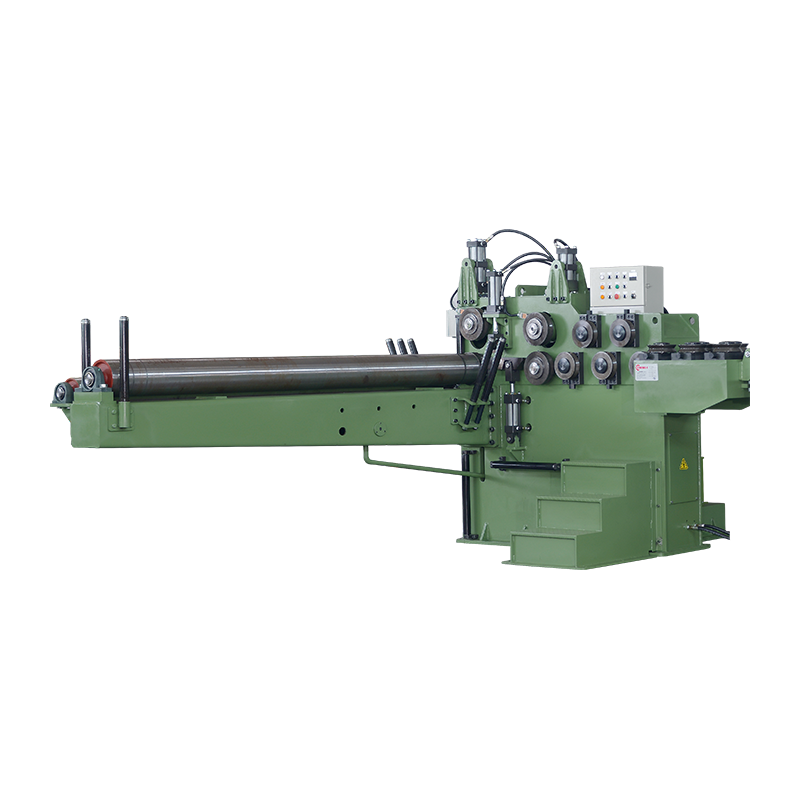
Related News
 For precision wire machinery or
integrated plant solutions, please
contact the
CHENG I Sales & Engineering Team.


Product Category
Wire Descaling Machine WIRE DRAWING MACHINE Take-Up Coiler Cutting Machine Pay-Off Machine Other Equipment/AccessoriesContact Us

+86-563-6616199 (Ext: 105, 103, 111)

+86-15167365999

John Wang & Elaine Zhao

sales@chengiwire.com

No. 8 Keji Road, North District, Guangde Economic Development Zone, Xuancheng City, Anhui Province, China
Copyright © CHENG I Wire Machinery Co. Ltd. All
Rights
Reserved
Wire Machinery Manufacturer | CHINA
