
 English
 русский
 عربى

How to Choose the Right Wire Drawing Machine: Practical Applications, Selection
Author: Admin
Date: Oct 20,2026
A fastener plant specifies a straight-line machine rated at 25 m/s to draw 5.5 mm rod down to 2.2 mm, installs it, and then loses 25 minutes every shift to pay-off tangles and a spool change that needs two operators. Nothing on the machine is broken. The purchase order was written around a headline speed instead of a reduction schedule, a coil weight and a take-up format.
Choosing the right wire drawing machine is a sizing exercise before it is a purchasing decision. Get the draft count, the coil envelope and the take-up format wrong and no amount of drive power rescues the line.
Definition: a wire drawing machine is never a single box. It is the full line - pay-off, descaling, die box and capstans, coolant and lubrication circuit, and take-up - and every module has to be sized against the same three inputs: incoming rod diameter, finished diameter, and required tonnes per shift.
CHENG-I PREMIUM WIRE EQUIPMENT (Cheng I Wire Machinery Co., Ltd.) has built line equipment since 1970 from Taiwan and manufactures in a 12,000 sq m subsidiary in Guangde, Anhui, established in 2022. Its catalogue covers 80 product types across pay-off, descaling, drawing, take-up and cutting, which matters because the questions below are answered best by a builder who owns the whole line rather than one section of it.
Content
- 1 Choose the Wire Drawing Machine Type From the Reduction Schedule
- 2 A Quoted Wire Drawing Machine Speed Only Applies at the Last Capstan
- 3 Size Pay-Off, Descaling and Take-Up Against the Same Coil
- 4 Where Drawing Lines Actually Lose Output
- 5 Specification Questions That Expose a Weak Quote Before You Sign
- 6 Frequently Asked Questions About Choosing a Wire Drawing Machine
Choose the Wire Drawing Machine Type From the Reduction Schedule
The machine type falls out of the reduction schedule, not out of a preference for vertical or tandem designs. Count the drafts first, then pick the capstan arrangement that can hold die temperature and tolerable slip for that schedule.
The area ratio is the whole calculation. Drawing 5.5 mm rod down to 1.2 mm gives (5.5 / 1.2) squared, or 21:1. At 20 to 25 percent area reduction per pass that is roughly 11 to 14 drafts, and that single number decides whether a compact double-draft unit is enough or whether the job needs a ten-die tandem line.
| Configuration | Inlet wire | Finished wire | Exit speed | Best fit | Watch for |
| Inverted vertical capstan, single or double draft | 1.0 to 8.0 mm | 0.3 to 4.0 mm | 8 to 25 m/s | High-carbon, spring and bead wire where die cooling and low tension matter | Coil handling above deck; needs ceiling height |
| Straight-line tandem, 6 to 12 dies | 0.8 to 6.0 mm | 0.15 to 3.0 mm | 10 to 30 m/s | Fine wire, cable and staple at one fixed size | Slow size changeover; slip accumulates across many dies |
| Double-draft or one-touch unit | 0.5 to 3.0 mm | 0.1 to 1.2 mm | 15 to 30 m/s | Small lots and frequent size changes | Lower total reduction per machine |
| Inverted vertical rolling machine | 5.5 to 8.0 mm rod | 3.0 to 5.0 mm | 3 to 10 m/s | Rod breakdown ahead of a fine drawing line | Not a finishing machine |
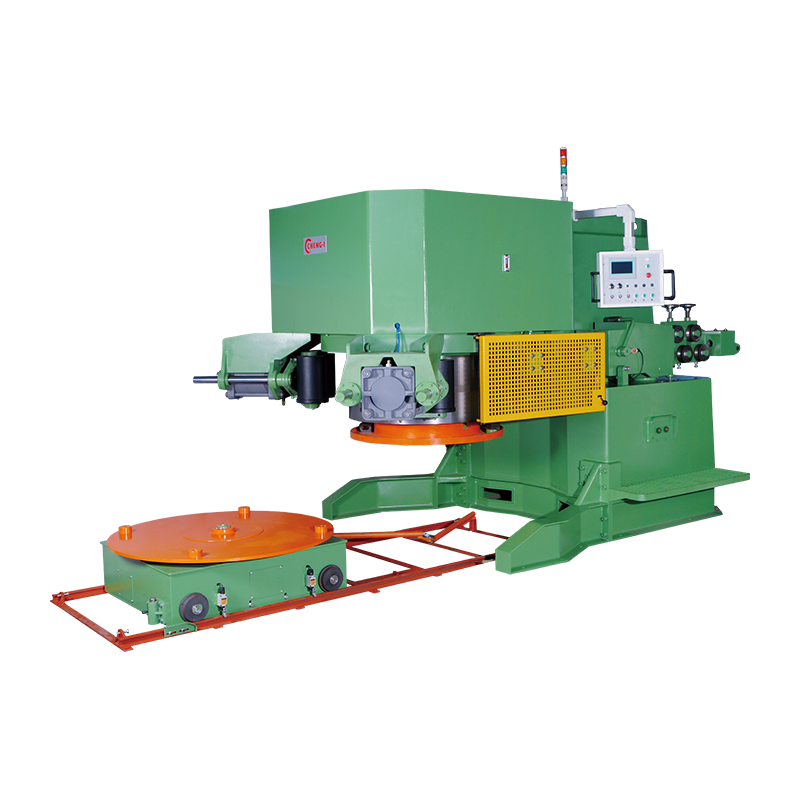 Inverted Vertical Capstan Wire Drawing MachineSingle-draft machine for ferrous, non-ferrous and alloy wire with water-cooled capstans and dies; relevant when comparing platforms for high-carbon or spring wire.View Product →
For high-carbon and spring wire the inverted vertical capstan is usually the better platform, because the die sits in a flooded box and the wire runs at low tension between passes. For one fixed size running at volume, a straight-line tandem line wins on output per square metre of floor.
A Quoted Wire Drawing Machine Speed Only Applies at the Last Capstan
Speed is a mass-flow figure, not a constant. With a 21:1 area ratio, a line running 1.0 m/s at the first capstan finishes at roughly 21 m/s on the last one, so the nameplate figure describes the exit capstan and nothing else.
v(out) = v(in) x (d(in) / d(out)) squared
1.0 m/s x (5.5 / 1.2) squared = about 21 m/s
Two consequences follow for selection. First, coolant flow has to be quoted per die position at that exit speed, because an undersized die box turns a fast machine into a machine that stops every 40 tonnes for die changes. Second, cumulative slip above 2 to 3 percent polishes the capstan surface and shortens die life, so ask for the slip calculation per capstan rather than a total figure.
21:1Area ratio, 5.5 mm to 1.2 mm
11-14Drafts at 20-25 percent area reduction
2-3%Maximum cumulative slip worth accepting
Ask what the coolant temperature rise is after four hours of continuous running. A quote that names a pump but not a heat exchanger duty has not been sized for production, only for a demonstration coil.
Size Pay-Off, Descaling and Take-Up Against the Same Coil
Coil handling causes more unplanned downtime on a drawing line than the die box does. Pay-off, descaling and take-up have to be specified against the same coil weight and the same downstream process, or the drawing machine becomes the fastest bottleneck in the plant.
- Pay-off: state the coil weight range and require a snarl stop plus prestraightening. A 1,250 kg coil that tangles costs 20 minutes, not 20 seconds.
- Descaling: abrasive belt or brush descaling removes scale without acid, but wire loss per tonne and surface finish must be written into the specification. Residual scale is the leading cause of die breakage on high-carbon steel wire.
- Take-up: spool format, traverse accuracy and tension range at full speed decide whether the package goes straight to the next process or needs rewinding.
- Cutting and pointing: a straightening and cutting machine only performs if the drawn wire is straight, and pointing or butt welding speed sets how fast a coil can be threaded at shift start.
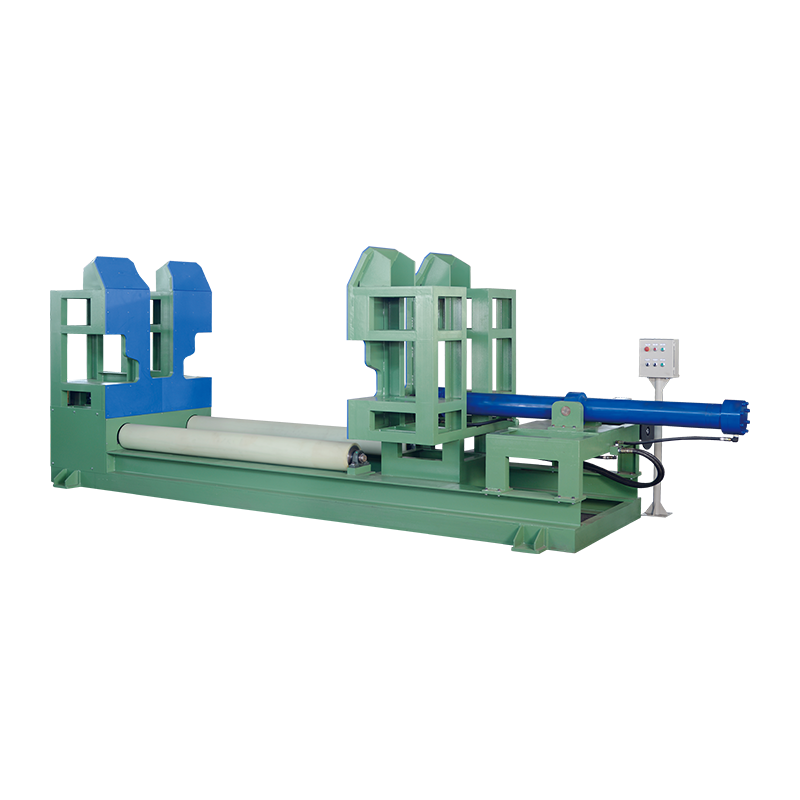
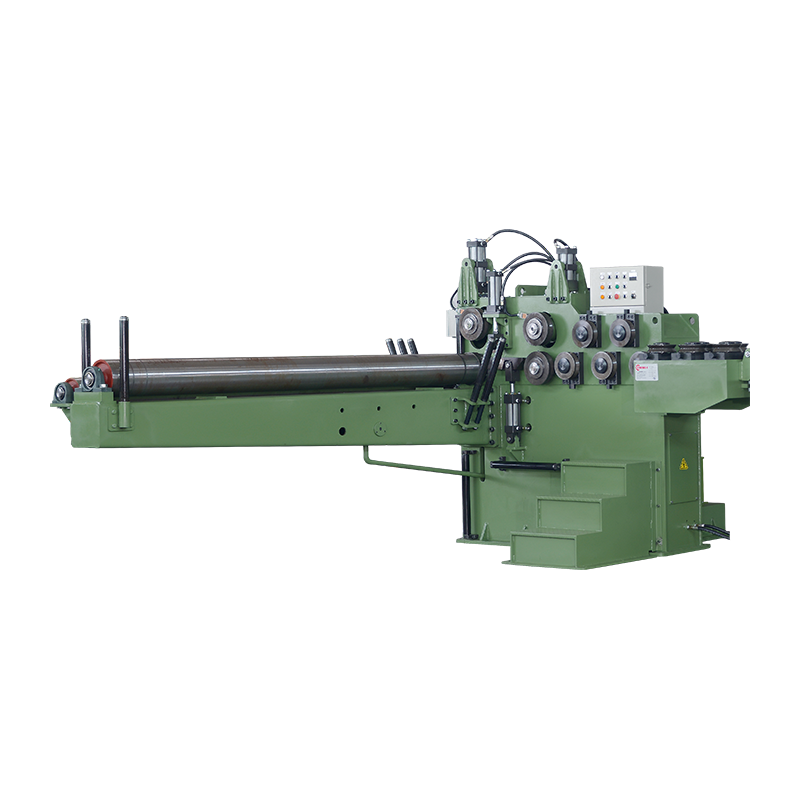 Wire Pay-Off, Pre-Straightening and Feeding UnitPay-off and straightening unit for wire up to 50 mm with vertical and horizontal rollers; match its model range to the line's heaviest coil.View Product →
A pay-off rated below the heaviest coil your rod supplier delivers converts every coil into a splicing stop. Confirm the coil envelope in writing before the line is quoted, not after the first delivery.
Where Drawing Lines Actually Lose Output
Die wear, pay-off tangles and spool changeover account for roughly three quarters of unplanned downtime on a typical drawing line, which is why those three items deserve more specification attention than drive power.
Indicative split of unplanned downtime on a drawing line
Planning benchmark compiled from equipment selection reviews; use it to weight specification questions, not as a performance guarantee.
The pattern is consistent: the losses cluster around wire handling, not around the electrical cabinet. That is why a high-speed coiler with controlled traverse and tension earns output back faster than an incremental increase in capstan speed.
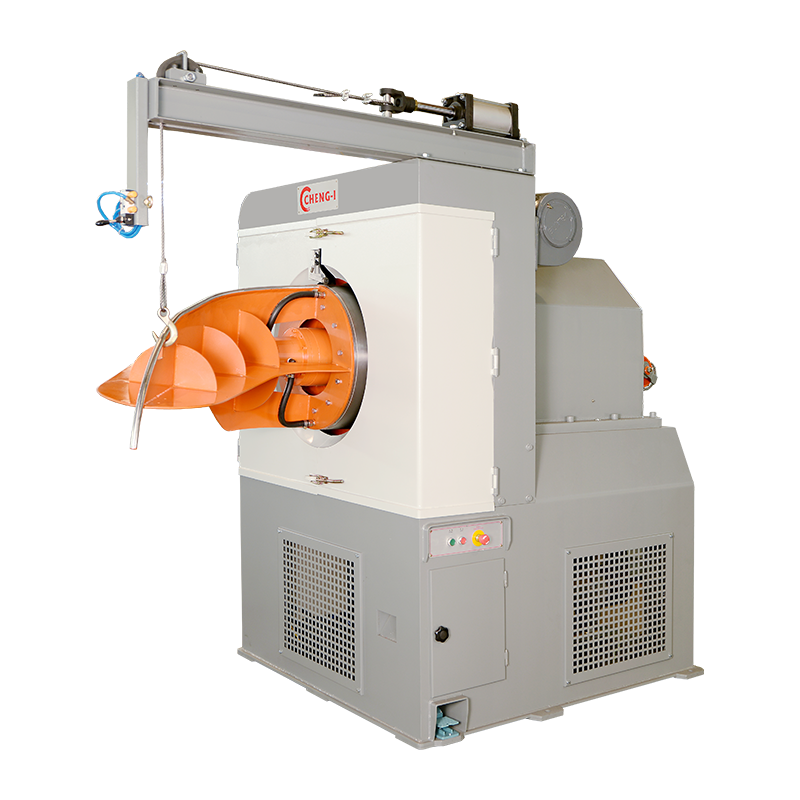 High-Speed Horizontal Capstan Wire Take-Up CoilerHorizontal-capstan take-up coiler for drawn wire, with forced air-cooled external capstan and tungsten carbide-coated wear surfaces; relevant when spool changes limit output.View Product →
If your shift currently stops twice for spool changes, a coiler matched to a larger package size removes one of those stops outright, and the drawing machine never has to run faster to deliver more tonnes.
Specification Questions That Expose a Weak Quote Before You Sign
A drawing machine quote is only as good as the numbers it commits to. Six items separate a line sized for production from a line sized for a brochure photograph.
| Specification item | Ask for in writing | Why it decides output |
| Die cooling | Coolant flow per die position, pressure, heat exchanger duty | Die wear sets both wire tolerance and stop frequency |
| Capstan | Surface coating, hardness, diameter, slip calculation per capstan | Slip above 3 percent polishes the capstan and shortens die life |
| Pay-off | Coil weight range, snarl stop, prestraightening roll count | Tangling turns a 30-second splice into a 20-minute stop |
| Take-up | Spool size range, traverse accuracy, tension range at full speed | Poor traverse ruins package density and blocks the next process |
| Descaling | Method, wire loss per tonne, surface finish target | Residual scale is the largest single cause of die breakage |
| Acceptance | Eight-hour run at 95 percent of rated speed, diameter tolerance, ovality | Proves the line, not the sample coil |
Acceptance test that protects the purchase
Run the line for eight continuous hours at 95 percent of rated speed on production coil, then measure diameter tolerance, ovality and package density, and record every die change. A machine that holds tolerance on a sample coil but drifts after four hours has a cooling problem, not a control problem, and that distinction should be settled before the final payment.
Frequently Asked Questions About Choosing a Wire Drawing Machine
How many drafts are needed from 5.5 mm rod to 1.2 mm wire?
Plan on 11 to 14 drafts. The area ratio is about 21:1, and at 20 to 25 percent area reduction per pass the draft count lands in that range. Fewer drafts means heavier per-pass reduction and shorter die life; more drafts means lower slip but a longer line.
Is an inverted vertical capstan better than a straight-line tandem machine?
It depends on the schedule and the lot size. Inverted vertical capstans handle high-carbon and spring wire better because die cooling is flooded and inter-pass tension is low; straight-line tandem lines deliver more output per square metre when the plant runs one size at volume.
What coil weight should the pay-off be rated for?
Match it to the heaviest coil your rod supplier actually delivers, commonly in the 1,000 to 2,500 kg range for steel rod. A pay-off rated below that converts each coil into an extra splicing stop and adds handling labour the original quote never mentioned.
How long should commissioning and acceptance take?
Allow two to three weeks for a full line: mechanical alignment, coolant circuit balancing, die trials and the eight-hour acceptance run. Compressing that window is the most common reason a new drawing machine underperforms for its first six months.
Summary: fix the reduction schedule, confirm the coil envelope, calculate slip and cooling at the exit capstan, and match pay-off, descaling and take-up to the same coil. The line that results is measured in tonnes per shift, not in metres per second on a nameplate.
Contact Us Now
Related products
Related News
 For precision wire machinery or
integrated plant solutions, please
contact the
CHENG I Sales & Engineering Team.


Product Category
Wire Descaling Machine WIRE DRAWING MACHINE Take-Up Coiler Cutting Machine Pay-Off Machine Other Equipment/AccessoriesContact Us

+86-563-6616199 (Ext: 105, 103, 111)

+86-15167365999

John Wang & Elaine Zhao

sales@chengiwire.com

No. 8 Keji Road, North District, Guangde Economic Development Zone, Xuancheng City, Anhui Province, China
Copyright © CHENG I Wire Machinery Co. Ltd. All
Rights
Reserved
Wire Machinery Manufacturer | CHINA
