
 English
 русский
 عربى

Energy Efficiency as a Key Driver in Wire Drawing Equipment Selection | CHENG-I
Author: Admin
Date: Oct 05,2026
A 900 kW wire drawing line that runs 6,000 hours per year at 65 percent average load consumes about 3,510 MWh per year. At an industrial electricity tariff of USD 0.10 per kWh, that is roughly USD 351,000 in energy cost. Energy efficiency and sustainability have become key drivers in wire drawing equipment selection, not because they sound responsible, but because they decide whether a plant can hold its margin when electricity prices and environmental requirements rise.
Content
- 1 Why Energy Efficiency Now Leads Wire Drawing Equipment Selection
- 2 The Metrics That Matter in Sustainable Wire Drawing Equipment Selection
- 3 Mechanical Descaling: A Fast Win for Both Energy and Chemical Use
- 4 Motor, Drive and Line Design: Where Wire Drawing Saves kWh/Ton
- 5 Take-Up, Pay-Off and Auxiliary Equipment Are Not Peripheral
- 6 Whole-Factory Planning Turns Individual Savings Into Plant-Level Results
- 7 A Practical Sequence for Energy-Conscious Equipment Buyers
- 8 Frequently Asked Questions on Energy-Efficient Wire Drawing
Why Energy Efficiency Now Leads Wire Drawing Equipment Selection
Energy efficiency now leads wire drawing equipment selection because it is the largest remaining controllable cost in a mature wire mill. Raw material price is often fixed by the rod supplier, and labor cost is difficult to reduce without automation. Energy is different: line configuration, motor selection, descaling method, and operating discipline all change it.
In a typical continuous wire drawing line, the main drive train accounts for 60-70 percent of connected load. Small efficiency improvements at the motor, capstan, and tension control level multiply into large annual savings. For CHENG-I Premium Wire Equipment, which has built descaling, drawing, pay-off, and take-up machinery since 1970, those savings are part of the machine specification, not an afterthought.
Drive train share of connected load60-70%
Potential energy savings from modern drives15-25%
Scrap reduction from stable tension control2-4%
Selection logic that ignores energy cost is already locked into five to ten years of avoidable operating expense. A machine that costs 3 percent more but uses 15 percent less energy often pays back the difference within the first two years.
The Metrics That Matter in Sustainable Wire Drawing Equipment Selection
The correct comparison unit is kWh per ton of finished wire at a defined inlet diameter, final diameter, and drawing speed. Without those parameters, energy claims are meaningless.
Energy efficiency in wire drawing equipment selection means measuring the total electrical, thermal, and chemical input required to convert rod or wire into saleable wire, not the nameplate rating of a single motor.
When evaluating suppliers, ask for energy data under realistic running conditions. The following table lists the criteria that have the largest effect on sustainability.
| Selection area | Question to ask the supplier | Sustainability effect |
| Drive system | Are motors IE4 or IE5 rated? Is the line equipped with variable-frequency drives? | Reduces partial-load losses and mechanical stress. |
| Descaling method | Can bending and brushing descaling replace heated chemical tanks? | Cuts chemical consumption, heating energy, and wastewater. |
| Take-up and pay-off | Does tension control prevent slip, vibration, and coil collapse? | Lowers scrap, rework, and idle-running time. |
| Cooling and lubrication | Are pump drives variable speed? Is lubricant filtered and recirculated? | Reduces water use and oil disposal frequency. |
| Line monitoring | Does the control system report kWh per ton in real time? | Helps operators identify drift before it becomes waste. |
Mechanical Descaling: A Fast Win for Both Energy and Chemical Use
Mechanical descaling is the most direct process-level change a wire mill can make to lower energy and chemical use. It replaces heated acid baths with room-temperature bending, brushing, and scale removal.
Acid pickling is energy-intensive because the bath must be kept at temperature, fume extraction must run, and the waste stream must be neutralized. Mechanical descaling avoids most of that cost. For many low-carbon, medium-carbon, and even high-carbon wire applications, the right combination of bending rolls and brushing provides a scale-free surface before drawing. For operations running mixed steel grades, the practical combinations are covered in our technical review of wire descaling methods and how they affect drawing quality.
Acid pickling line
- Heated tanks consume steam or electricity continuously.
- Acid, inhibitor, and rinse water create effluent treatment cost.
- Longer process path increases floor space and ventilation load.
Mechanical descaling line
- Bending rollers and abrasive belts break scale at room temperature.
- No acid bath means no pickling fumes or waste neutralization.
- Shorter line footprint reduces building and ventilation demand.
Mechanical descaling is not a compromise in every case. It can improve die life when scale is removed uniformly, and it keeps the wire surface free of residual chemical films that can affect lubricant pickup.
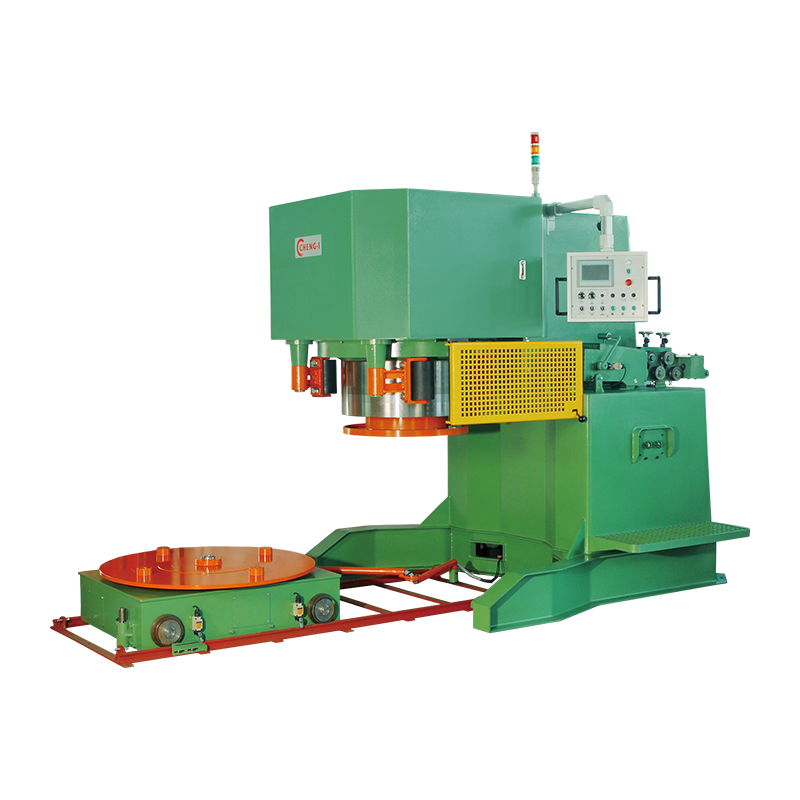
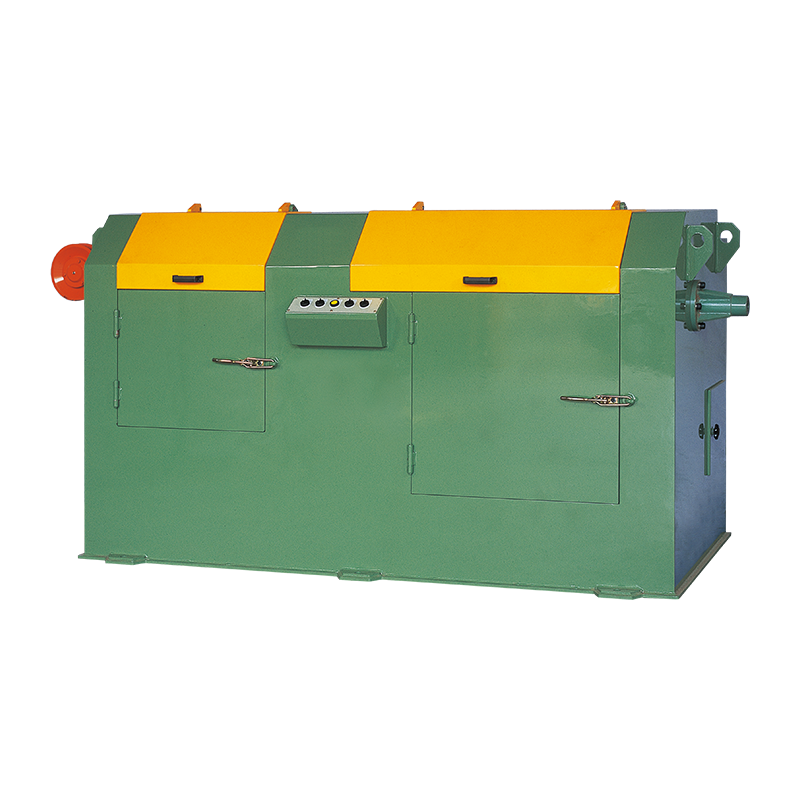 Bending Roller Wire Descaling Machine for Scale RemovalThis mechanical descaling unit removes mill scale and oxidation before drawing, using three or five orthogonal bending rollers and tungsten carbide inserts. Its adjustable straightener and motorized roller control suit wire up to 16mm, improving die life and lubricant pickup.View Product →
Motor, Drive and Line Design: Where Wire Drawing Saves kWh/Ton
The main drive train is the first place to save energy because it handles the largest share of the electrical load. High-efficiency motors and variable-frequency drives allow the line to match speed and torque to the actual product, instead of wasting power at full rating.
Straight-line wire drawing machines with low-friction capstans, accurately aligned passes, and responsive electrical control produce less heat and less mechanical loss. CHENG-I Premium Wire Equipment has developed its inverted vertical capstan and straight-line machines through six generations, with an emphasis on advanced electrical control, precision, and stability. Those are not marketing terms; they translate into measurable kWh per ton.
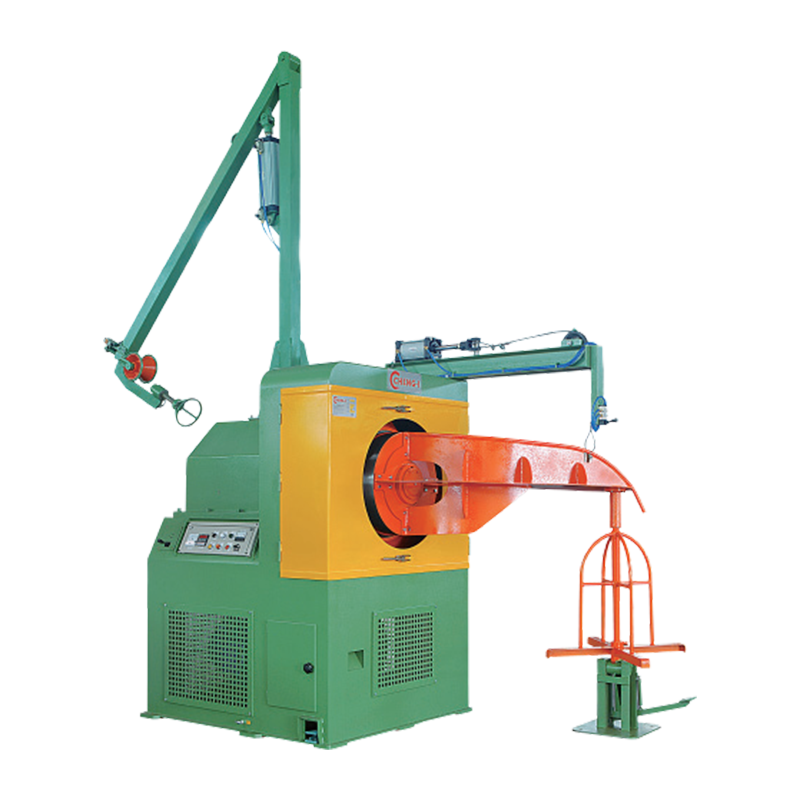
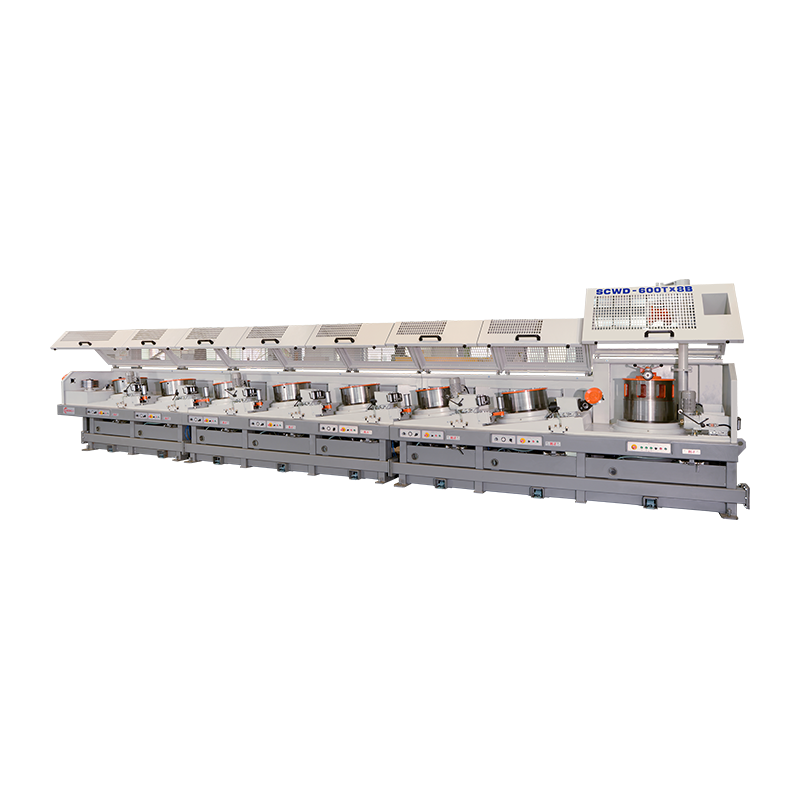 Straight Line Wire Drawing Machine with Dancer-Arm ControlThis heavy-duty drawing machine handles low to high carbon, stainless, and alloy wire across 2–16 drafts with capstans from 300–900mm. Dancer-arm speed control, optional ceramic or carbide coatings, and pressure die boxes support stable high-speed operation and lower energy consumption per ton.View Product →
The chart below shows how the combination of mechanical descaling, high-efficiency drives, and optimized take-up lowers specific energy use on a typical high-carbon line.
These are illustrative values for a high-carbon wire line, not a universal guarantee. They show the direction of change and the relative weight of each decision.
Take-Up, Pay-Off and Auxiliary Equipment Are Not Peripheral
Steady winding and controlled pay-off keep the line moving, and continuous running is the simplest energy-saving strategy in drawing. Each stop wastes the energy already consumed to accelerate the line and creates scrap during speed ramps.
Modern take-up coilers with horizontal capstans, traversing control, and precise tension sensing allow higher line speeds without coil defects. Pay-off machines that feed the wire without excessive back tension reduce the load on the drawing capstans. These components are often treated as accessories, but they determine whether the main drive runs at optimum efficiency.
- Tension monitoring prevents over-tightening and coil collapse.
- Synchronized traversing keeps the coil edge straight and stable.
- Automatic indexing reduces operator intervention and idle time.
- Low-friction guides lower the amount of power the machine must apply.
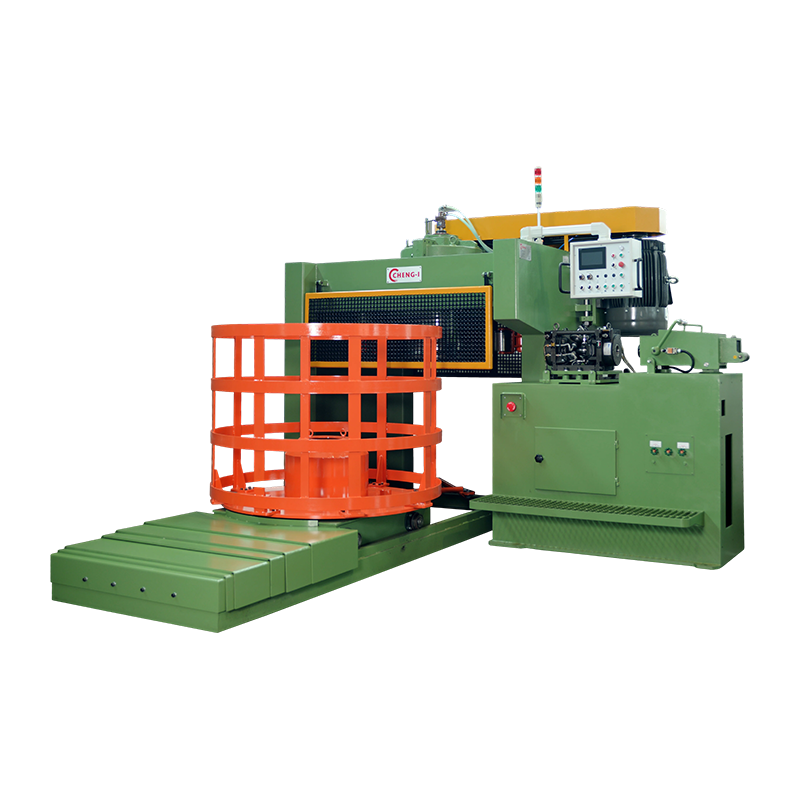
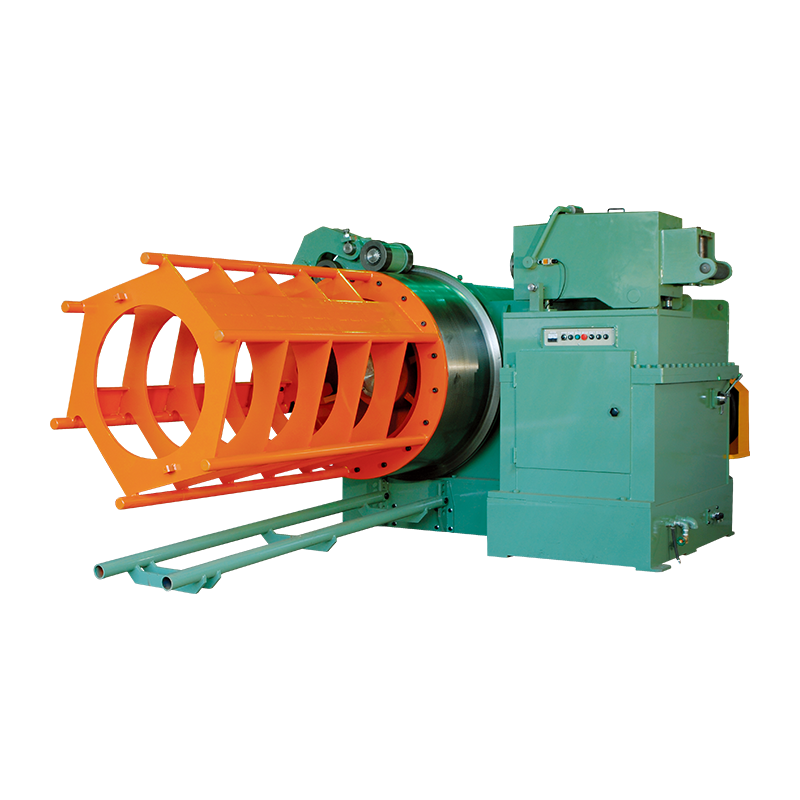
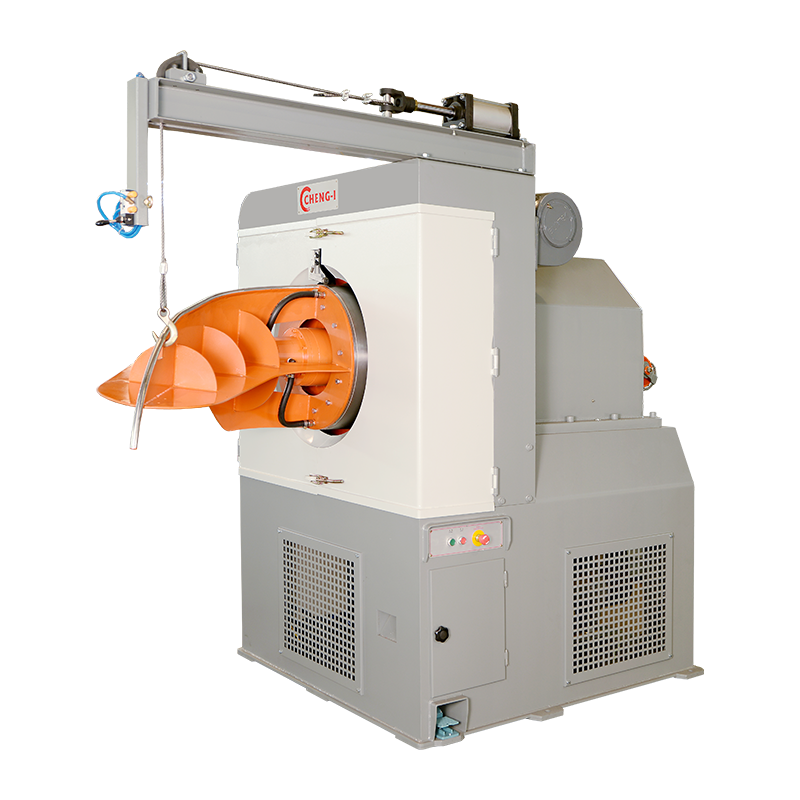 High Speed Horizontal Capstan Coiler for Drawn WireThis forced air-cooled coiler takes up drawn wire on a horizontal static capstan with optional drawing capability. Sizes range from 300–900mm, featuring tungsten carbide wear surfaces, cast and helix straighteners, and precise tension control to maintain line speed without coil defects.View Product →
A high-speed horizontal capstan coiler, matched to the drawing machine outlet, is one of the most effective ways to capture the energy savings planned in the drive train.
Whole-Factory Planning Turns Individual Savings Into Plant-Level Results
Complete factory planning is the difference between buying an efficient machine and operating an efficient process. A machine cannot be sustainable if the cooling water system is oversized, the lubricant cannot be filtered, or the layout forces material to travel through extra handling steps.
Whole-factory planning means aligning machine layout, material flow, power infrastructure, cooling, and lubrication systems so that energy efficiency and sustainability are designed into the production system from the first drawing.
CHENG-I offers complete factory planning in addition to individual machines. That matters for buyers because decisions made at the layout stage affect energy use for the entire life of the plant. A line planned with short material paths, centralized lubrication, recirculating water, and accessible maintenance points is easier to keep efficient than a line assembled from mismatched equipment.
For a new plant, the equipment selection process should start with the target product mix and finish with the utility connections. For an existing plant, the same logic applies to upgrades: measure the current line, identify the process with the highest avoidable energy loss, and replace that section first.
A Practical Sequence for Energy-Conscious Equipment Buyers
Use a repeatable selection sequence when comparing suppliers. This prevents the purchase from being decided only by price.
- Set a baseline: record current kWh per ton, water consumption, and chemical cost for the product family.
- Request energy data: ask each supplier for predicted energy use at your wire size, speed, and material grade.
- Evaluate the descaling route first because it changes both chemical and thermal load.
- Check the drive architecture, including motor class, variable-frequency drives, and regenerative options.
- Include take-up, pay-off, lubrication, and cooling in the comparison, not just the drawing machine.
- Plan commissioning targets so that installed performance matches the promised kWh per ton.
This sequence is simple, but it forces suppliers to answer the same questions with comparable numbers. It also creates a clear record for engineering and finance approval.
Frequently Asked Questions on Energy-Efficient Wire Drawing
How much energy can a modern wire drawing machine save?
A line configured with mechanical descaling, high-efficiency motors, variable-frequency drives, and optimized take-up can reduce specific energy use by 15-35 percent compared with a conventional line, depending on the starting condition of the equipment and the steel grade.
Does mechanical descaling eliminate acid pickling?
For many low-carbon and medium-carbon wire applications, mechanical descaling replaces pickling fully. For certain high-carbon, alloy, or heavily rusted products, a hybrid approach combining mechanical descaling with a short chemical treatment may be more reliable. The decision should be based on surface quality requirements and die-life targets.
What is the most useful sustainability metric for comparing wire drawing equipment?
kWh per ton of finished wire, measured at defined inlet and outlet diameters and a fixed drawing speed, is the most useful metric. It should be combined with water consumption per ton and lubricant consumption per ton for a complete picture.
Why is line speed part of energy efficiency?
Line speed determines how quickly the fixed connected load is spread across production volume. A line that runs at 80 percent speed for the same output uses more kWh per ton because lighting, pumping, and control systems still consume power for a longer period.
Contact Us Now
Related products
Related News
 For precision wire machinery or
integrated plant solutions, please
contact the
CHENG I Sales & Engineering Team.


Product Category
Wire Descaling Machine WIRE DRAWING MACHINE Take-Up Coiler Cutting Machine Pay-Off Machine Other Equipment/AccessoriesContact Us

+86-563-6616199 (Ext: 105, 103, 111)

+86-15167365999

John Wang & Elaine Zhao

sales@chengiwire.com

No. 8 Keji Road, North District, Guangde Economic Development Zone, Xuancheng City, Anhui Province, China
Copyright © CHENG I Wire Machinery Co. Ltd. All
Rights
Reserved
Wire Machinery Manufacturer | CHINA
