
 English
 русский
 عربى

Modular Wire Drawing Platforms Enable Rapid Changeover and Custom Production Setups
Author: Admin
Date: Sep 30,2026
Wire drawing operations face a simple pricing reality: downtime is paid for by the next order, not the running one. A plant handling six wire sizes on two lines may spend 90 to 120 minutes on each product change, plus two or three coils of off-spec material while the line stabilizes. Once batches get smaller, that cost stops being an inconvenience and becomes a capacity problem. Cheng-I Premium Wire Equipment has responded to this shift by engineering drawing lines as interchangeable modules, not monolithic machines. Modular wire drawing platforms enable rapid changeover and custom production setups when each stage of the line is sized, driven, and tooled as an independent unit.
80 Product Types
50+ Years of Experience
12,000 sqm Manufacturing Base
7/24 Service Response
Content
What Modular Wire Drawing Platforms Enable
Rapid changeover happens at the interfaces between process stages, not inside the gearbox. A modular platform separates the payoff unit, descaling unit, drawing machine, lubricating applicator, and take-up coiler so an operator can adjust or swap one module without disturbing the rest of the line. On a conventional straight-through line, the payoff, drawing blocks, and coiler often share a single mechanical drive train and fixed alignment. Changing wire diameter means changing dies, adjusting capstan speeds, replacing the take-up package, and re-validating tension.
With modular drives, each section has its own motor and control loop. The operator enters the new wire diameter, target reduction, and coil weight from the HMI; the modules run coordinated setup routines, and the physical changeover is limited to die carrier and spool handling.
Rapid changeover is the ability to switch from one wire drawing program to another in less than the time needed to produce a single coil, with no mechanical rework beyond tooling and package changes.
The practical result is visible on the product mix. A line that draws 8 mm rod for hardware wire in the morning can be changed to 5.5 mm high-carbon steel wire in the afternoon without waiting for a maintenance crew. The same platform can also accept a different descaling mode, such as mechanical scale removal for bright wire or a coated surface for wet lubrication. That flexibility is why CHENG-I builds straight-line drawing machines with independent block drives and standardized interfaces.
- Pay-off stand with tension feedback and motorized positioning for quick coil loading.
- Descaling unit with adjustable bending rolls and brushing head.
- Straight-line wire drawing machine with separate capstan drives.
- Take-up coiler with programmable traverse and dynamic tension control.
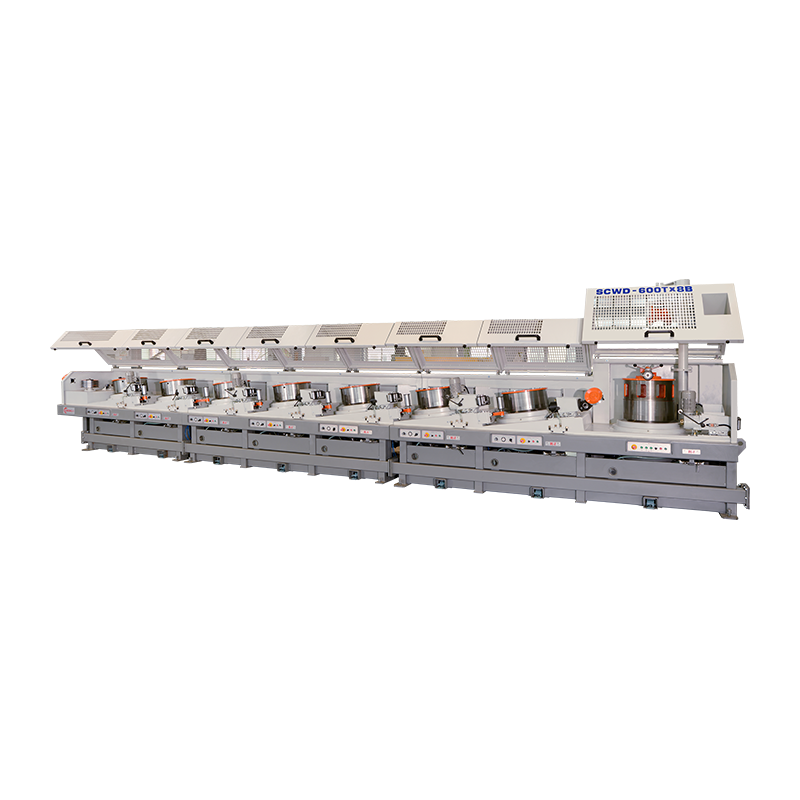
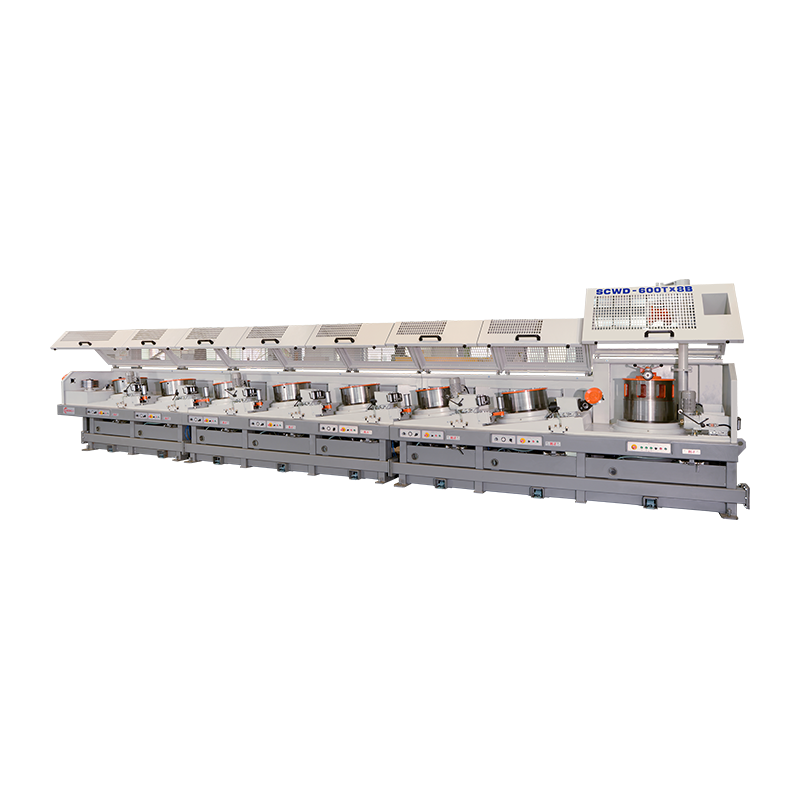 Straight Line Wire Drawing Machine for Flexible Multi-Material LinesThis modular straight-line machine supports fast changeover between rod sizes and steel types, with independent block drives and standardized interfaces for descaling and coiling, making it ideal for flexible production schedules.View Product →
Where Conventional Lines Lose Time to Changeover
Conventional lines lose the most time on mechanical alignment, shared speed control, and cleaning between product families. An operator changing from 8 mm rod for fasteners to 5.5 mm high-carbon wire has to verify descaling gap, check die box alignment, reset block speeds, and replace a different coil package on the take-up. On a shared-drive machine, those adjustments are sequential. On a modular platform, the descaling module can pre-set bending depth while the drawing block reaches operating speed, and the take-up coiler changes traverse pattern independently.
| Stage | Conventional | Modular |
| Pay-off and coil change | 15-25 min, manual centering | 5-10 min, motorized positioning |
| Descaling settings | 10-20 min, trial pass | 3-5 min, recipe recall |
| Die exchange | 20-30 min, alignment | 10-15 min, tool-less carrier |
| Take-up change | 15-30 min, traverse adjustment | 5-8 min, programmable traverse |
| First coil validation | 20-40 min, manual measurement | 8-12 min, in-line feedback |
Setup-time reduction of 40-60% is realistic when changeover tasks move from mechanical alignment to recipe-driven module setup.
Monolithic line
Shared drive, fixed alignment, sequential adjustment, and one product family for long shifts.
Modular platform
Independent drives, parallel setup, recipe recall, and multiple product families per day.
Design Choices for Custom Production Setups
Custom production setups become feasible when six design choices are made deliberately: independent drives, identical footprints, tool-less die carriers, programmable capstan speeds, separated lubrication zones, and standardized electrical interfaces. Choose these six at the specification stage, and the line can be reconfigured later with bolt-on changes instead of structural modification. Wire processors rarely know which product family will dominate next year. The modular approach protects against that uncertainty. For example, a line that draws high-carbon spring wire during the day can switch to stainless steel wire for bright fasteners by changing the die sequence, adjusting the descaling mode, and changing the take-up package.
Plan a modular line in five steps
- Define the coil weight range, wire diameter window, and reduction schedule before selecting block combinations.
- Select a payoff and descaling module that can operate independently from the main drawing section.
- Choose a straight-line or inverted vertical capstan drawing machine with individual block drives and a repeatable die carrier interface.
- Specify the take-up coiler with programmable traverse, tension range, and spool size options.
- Store every product family as a recipe in the HMI, including descaling depth, block speeds, and traverse pattern.
Standardized module footprints let you add a second descaling unit or replace a coiler without re-engineering the line foundation.
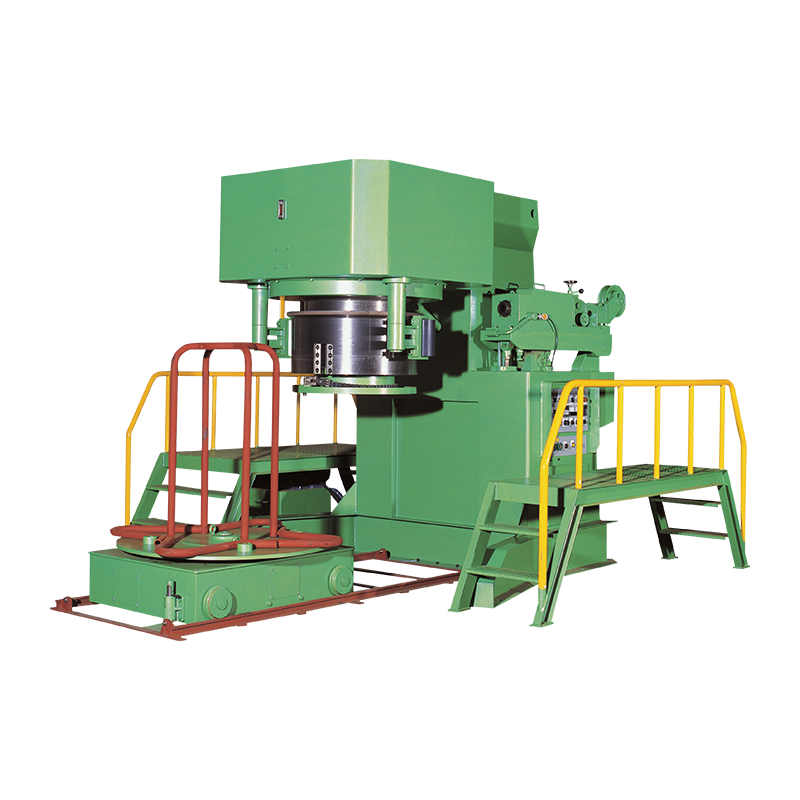
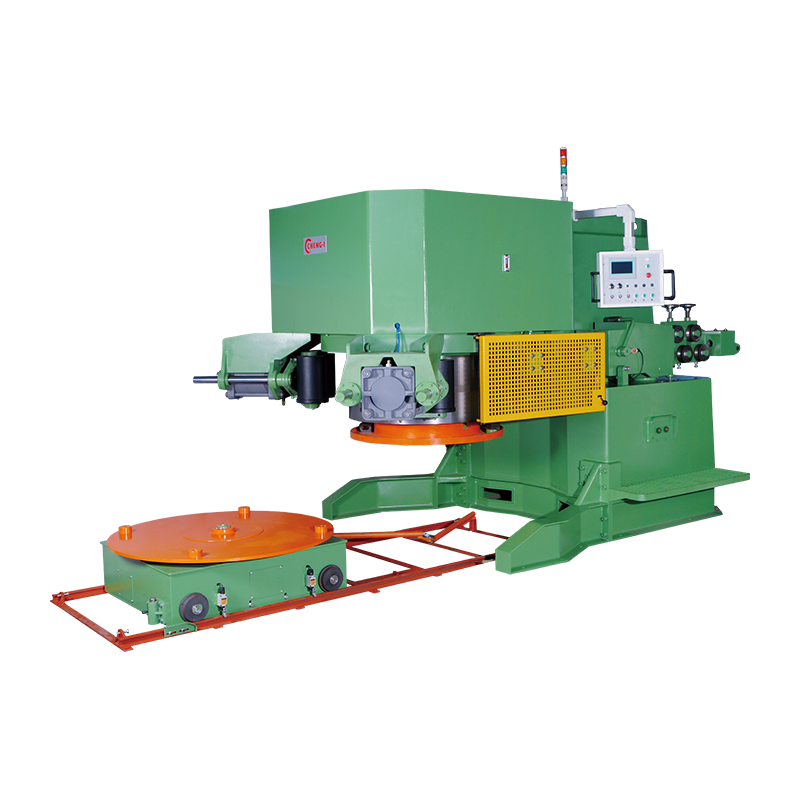 Inverted Vertical Capstan Wire Drawing Machine for Setup EfficiencyThis single- or double-draft machine offers water-cooled capstans and dies, HMI control, and optional take-up configurations. Its modular design helps reduce changeover time compared to shared-drive lines.View Product →
Financial Impact of a Modular Wire Drawing Platform
Modular platforms improve usable output by cutting changeover time, reducing start-up scrap, and letting one line serve multiple product families without long idle periods. The setup-time gap is easy to visualize. A conventional shared-drive line may need two hours from the last good coil of one family to the first accepted coil of another. A modular line with recipe control and tool-less die carriers typically needs 15 to 25 minutes. Between those extremes, semi-modular machines that have independent payoff and coiler drives but still share the main drawing section usually land around one hour.
Typical changeover time from last good coil to first accepted coil
Monolithic 120 min
Semi-modular 65 min
Full modular 20 min
The same pattern appears in field experience from heavy industrial applications: the biggest gains come not from maximum speed, but from keeping the line available for the next product.
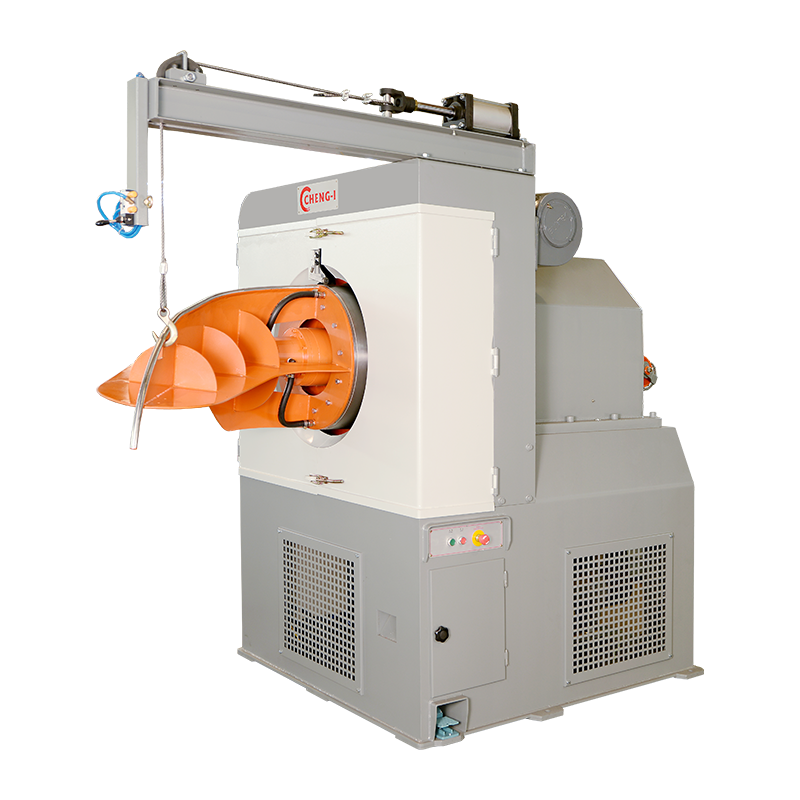 High Speed Horizontal Capstan Coiler for Independent Take-UpThis coiler features forced air cooling, tungsten carbide-coated capstans, and optional drawing capability. Its independent drive reduces traverse setup time and supports different coil weights without adjusting the main drawing block.View Product →
Implementation Checklist for a Modular Drawing Line
Start with the bottleneck stage and standardize interfaces before adding automation. Many plants begin by replacing a shared-drive coiler with an independent take-up module. That one change cuts traverse setup time and lets the line run different coil weights without adjusting the main drawing block. The same logic applies to descaling units and payoff stands. If the interface is standard, later expansion is mechanical.
- Confirm the target wire diameter range, reduction schedule, and coil weight before choosing block combinations.
- Require that payoff, descaling, drawing, and coiler modules use the same electrical and communication standard.
- Validate the die carrier design for repeatable seating; tool-less exchange only helps if alignment is consistent.
- Test the HMI recipe system with your actual product families during factory acceptance.
- Budget for one spare tooling kit per die carrier and traverse guide.
A factory acceptance test should include three consecutive changeovers, not just one.
Frequently Asked Questions
Can an existing wire drawing machine be converted to a modular setup?
Yes, in most cases. The priority is to separate the take-up and payoff drives from the main machine and to add recipe-based controls. If the existing drawing unit already has an individual capstan drive, the conversion can be done without replacing the gearbox.
What wire types benefit most from modular drawing platforms?
Fastener wire, high-carbon spring wire, stainless steel wire, and galvanized wire benefit most because these product families frequently run in small batches with different die sequences and coating requirements.
How long does a typical changeover take on a modular line?
A full modular line with recipe management and tool-less die carriers can complete a wire diameter change in 15 to 25 minutes, compared with 90 to 120 minutes on a conventional shared-drive line.
What should you specify when ordering modular payoff or take-up equipment?
Specify the coil weight, wire diameter range, maximum line speed, traverse stroke, and whether the unit must run multiple wire families. These parameters determine the motor torque, capstan diameter, and traverse acceleration.
Contact Us Now
Related products
Related News
 For precision wire machinery or
integrated plant solutions, please
contact the
CHENG I Sales & Engineering Team.


Product Category
Wire Descaling Machine WIRE DRAWING MACHINE Take-Up Coiler Cutting Machine Pay-Off Machine Other Equipment/AccessoriesContact Us

+86-563-6616199 (Ext: 105, 103, 111)

+86-15167365999

John Wang & Elaine Zhao

sales@chengiwire.com

No. 8 Keji Road, North District, Guangde Economic Development Zone, Xuancheng City, Anhui Province, China
Copyright © CHENG I Wire Machinery Co. Ltd. All
Rights
Reserved
Wire Machinery Manufacturer | CHINA
